English
 Español
 Français
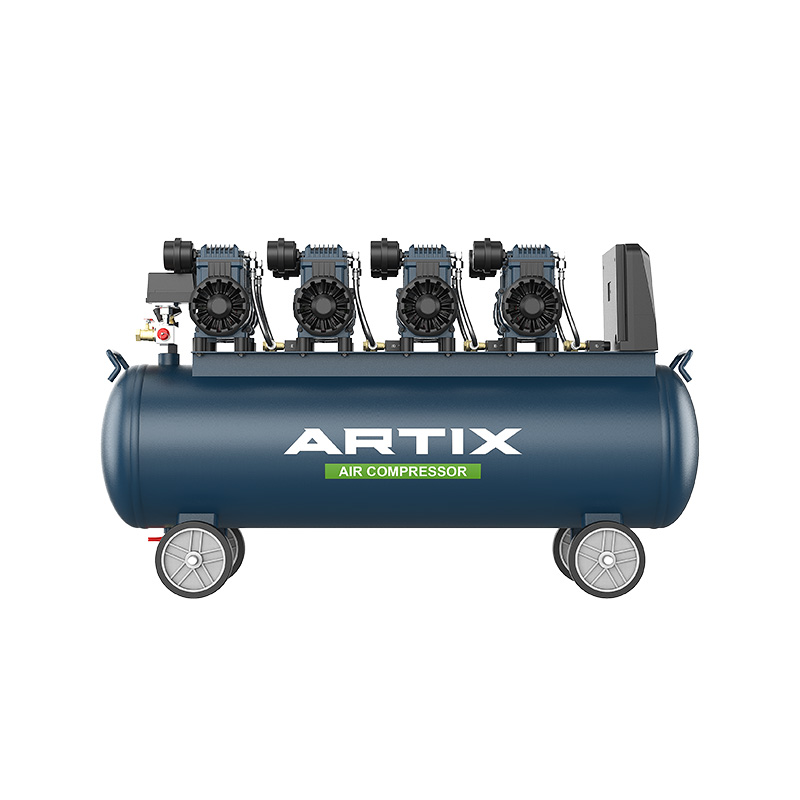
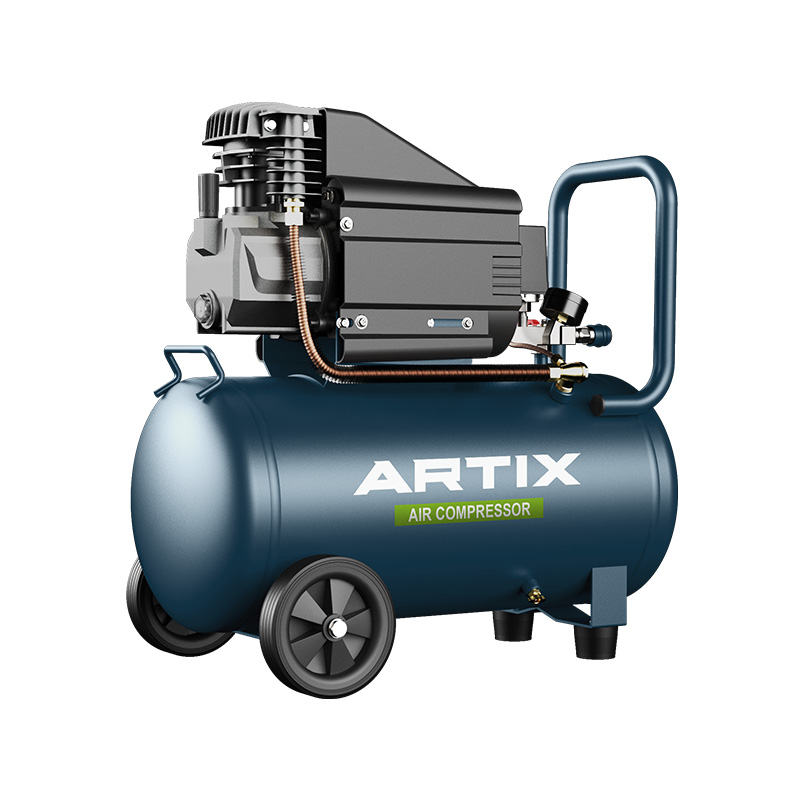
A hobbyist working late in a basement workshop once asked: “Why does my air compressor sound like a jackhammer?” That question led him to search for a Silent Oil Free Air Compressor. He soon learned that noise ratings on a box don’t always match real-world experience. Many users on forums describe how a loud compressor forces them to stop work at 9 p.m. or wear double hearing protection. Others mention that even a garage compressor can disturb neighbors through shared walls. An oilless air compressor designed for low noise, however, changes that picture entirely. It promises quieter operation and cleaner air, but does it truly deliver “quiet enough” for indoor use?
What makes a silent oil-free compressor truly quiet indoors?
1. Decibel range and human perception
A typical small piston compressor without noise treatment runs at 78 to 85 decibels. That range is similar to a vacuum cleaner or a busy street. A silent oil-free air compressor often operates at 50 to 60 decibels, which users compare to a normal conversation or a running refrigerator. One user wrote on a DIY forum: “I ran my silent unit under a workbench while my child slept in the room above. No one woke up.” The difference comes from slower motor speeds, rubber isolation mounts, and sometimes a sound-insulated cabinet. For indoor workshops, that 20-decibel drop is the line between tolerable and truly quiet.
2. Vibration control matters more than the decibel number
Even a compressor rated at 55 dB can feel loud if it vibrates through a wooden floor or resonates against a wall. An oilless air compressor removes the oil pump assembly, which reduces one source of mechanical vibration. But manufacturers like Artix Machinery Co., Ltd. go further by adding thick elastomer feet and heavy-gauge steel shrouds that dampen resonance. One user shared a simple trick: “I placed my Silent Oil Free Air Compressor on a rubber stall mat from a farm supply store. The noise dropped by half. Now I only hear air hissing, not metal shaking against the floor.”
3. Tank size and placement dramatically change perceived noise
A 6-gallon horizontal tank rings less than a 20-gallon vertical tank because less metal surface acts like a drum head. For indoor use, many choose a Silent Oil Free Air Compressor with a small tank and mount it on a wall with rubber isolators. Another user described a clever setup: “I hung my Oilless Air Compressor from ceiling joists using bungee cords. The motor still makes noise, but the building structure doesn’t carry the vibration. It’s almost silent from the next room.” Professional woodworkers also build plywood enclosures lined with acoustic foam, leaving space for airflow.
4. Real-world test: running a brad nailer in a finished basement
A finish carpenter once asked a forum: “Can I use an Oilless Air Compressor inside a client’s finished basement without looking unprofessional?” He tested a silent model rated at 58 dB. The client was reading on a couch 15 feet away and did not look up once. The nailer itself made more noise than the compressor. That carpenter now owns three silent oilless units and refuses to go back. He noted that the quiet operation also lets him hear the tool work, which improves his accuracy.
5. What users still complain about after a year
Not every compressor labeled “silent” lives up to the name. A few users noted that after two years, their Silent Oil Free Air Compressor developed a high-pitched whine from bearing wear. One person said, “It’s not loud, but the pitch cuts through walls.” Regular cleaning of intake filters and occasional lubrication of motor bearings (where permitted) helps. Artix Machinery Co., Ltd. provides replacement filter sets and vibration pads specifically to extend quiet operation. Another user warned: “Don’t put a silent compressor inside a small sealed cabinet without ventilation. It will overheat and get loud again.”
What indoor users should do before buying
First, check the manufacturer’s decibel rating at 1 meter. Second, read user reviews that mention “apartment” or “basement.” Third, plan to add a rubber mat or wall mount. A silent oil-free air compressor works indoors if you manage vibration, placement, and realistic expectations. It will not be completely silent — no compressor is — but it can be quiet enough to let you work late without angering your household or neighbors.
An oilless air compressor labeled “silent” works indoors if you manage vibration, tank placement, and realistic expectations. Test it at 50–60 dB. Put it on a mat. Build a small baffle box if needed. The question is not whether it is “perfect” — but whether it lets you work without angering your household. For many, the answer is yes.