English
 Español
 Français
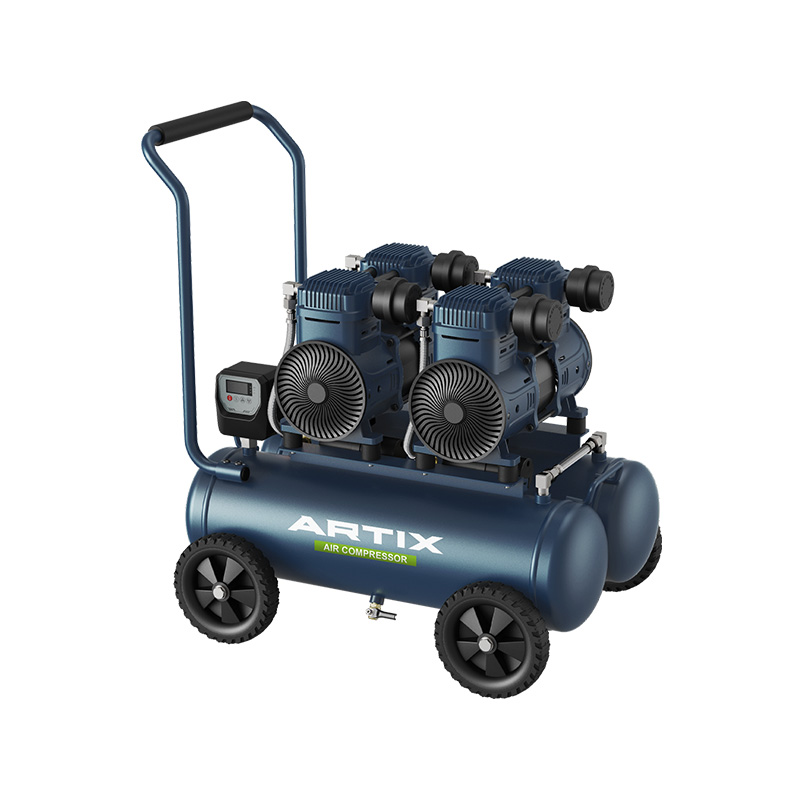
Among users choosing compressed air solutions for workshops, small factories, or maintenance facilities, one question appears again and again: Are direct driven air compressors quieter than alternatives, and what does that mean in daily operation? Before diving into noise performance, it helps to understand what differentiates a Direct Driven Air Compressor from a Belt Driven Air Compressor at a mechanical level. Direct driven systems link the compressor pump directly to the motor crankshaft without belts or pulleys, while belt driven systems transmit power via belts and pulleys, allowing performance tuning and sometimes quieter operation due to the mechanical buffer that belts provide.
This fundamental difference influences not just noise, but also maintenance, efficiency, and usability — all of which users bring up when evaluating options. Artix Machinery Co., Ltd. often highlights these practical aspects to help customers match the right compressor to their applications, from intermittent shop use to more demanding industrial cycles.
1. Why Does Drive Type Affect Noise Levels?
A major reason people ask whether a direct driven compressor is quieter is the way vibrations travel through the machine. Direct driven air compressors transmit motor motion straight into the compressor pump. Because there is no damping component, such as a belt, these vibrations move more directly through the structure, which can translate into higher audible noise in some configurations.
On the other hand, the belt and pulley system of a belt driven air compressor often acts as a mechanical cushion between the motor and pump. This buffer can absorb some vibration and reduce noise that would otherwise propagate through the machine frame and the environment. In settings where operators spend extended periods near running equipment — such as enclosed workshops — this perceived difference becomes an important practical consideration.
2. Does Pump Speed Contribute to Sound Differences?
Another factor is how each drive type influences compressor speed. With direct driven systems, the pump often runs at the same speed as the motor, which means fewer components but also results in higher rotational speeds if the motor is designed that way. This can contribute to increased noise, especially in compressors without additional sound-dampening measures.
By contrast, belt driven compressors allow for variable speed ratios between the motor and pump. Adjusting the pulley sizes can reduce the pump speed relative to the motor, often lowering noise output. This configuration also provides flexibility to match performance to specific tasks, which is another reason users bring up belt driven systems in general discussions.
3. What Role Does Environment Play in Perceived Noise?
The location and operating environment make a real difference in how sound matters. Many users question whether a quieter compressor justifies a more complex drive system. In a residential-adjacent workshop or an indoor facility with limited sound-proofing, a compressor that runs more quietly can reduce operator fatigue and make the work environment more pleasant. The belt drive’s mechanical isolation often contributes to lower airborne noise levels, which attracts attention in real-world use cases beyond pure specs.
Meanwhile, in large open manufacturing halls or continuous industrial applications, ambient noise levels are often already high due to other machinery. In that scenario, the relative difference in sound between direct and belt driven units may be less noticeable. What matters more here are reliability and duty cycle compatibility — which direct driven designs support well due to their simpler mechanical layout and reduced need for belt maintenance.
4. Do Direct Driven Compressors Always Mean Higher Maintenance?
Many users also tie noise concerns to maintenance expectations. There’s a perception that a quieter machine must also be easier to maintain, but this is not always clear-cut. While belt drive systems may run more quietly due to vibration cushioning, they also introduce belts as wear components — requiring periodic inspection, tensioning, and eventual replacement.
In contrast, a Direct Driven Air Compressor has fewer moving parts between the motor and pump. That simplicity often leads to lower ongoing maintenance effort, albeit sometimes at the expense of increased noise and higher initial cost. Some buyers consider this trade-off acceptable because it reduces downtime and keeps maintenance cycles straightforward.
5. What Does This Mean for Your Choice?
So, are direct driven compressors quieter? The short answer users are grappling with in discussions is: it depends. In many practical situations, direct driven designs can produce more noticeable vibration and sound due to the direct motor-pump coupling, whereas belt driven compressors may run smoother and slightly quieter thanks to mechanical buffering. The trade-offs extend beyond noise, encompassing maintenance, flexibility, and cost considerations that go into every purchase decision.
For teams seeking to balance performance, serviceability, and overall worksite experience, reflecting on these real differences can help guide selection of the right compressor drive configuration for their needs.
Noise is just one piece of the picture when comparing direct driven and belt driven air compressors. While a direct driven compressor’s simplicity supports maintenance and reliability in continuous work environments, belt driven models often attract attention for their quieter operation and flexibility in performance adjustment. Users raising questions about sound performance are really exploring how drive type affects their daily workflow, comfort, and long-term costs — and understanding these effects helps make more informed choices.