English
 Español
 Français
One of the more frequent questions among shop owners and maintenance teams is whether a Belt Driven Air Compressor or a Direct Driven Air Compressor will better fit their workflow. These two drive types use very different mechanical layouts, and although both deliver compressed air for tools and systems, users often focus on how they affect flexibility, maintenance, noise, and energy costs. Understanding core distinctions helps you match the right type to your specific operational needs.
In general terms, a belt driven model uses a belt and pulley system to transmit power from the motor to the compressor pump, allowing adjustable speed ratios between them. By contrast, a direct driven model connects the motor shaft directly to the compressor crankshaft without intermediary parts, which simplifies the transmission and reduces energy loss.
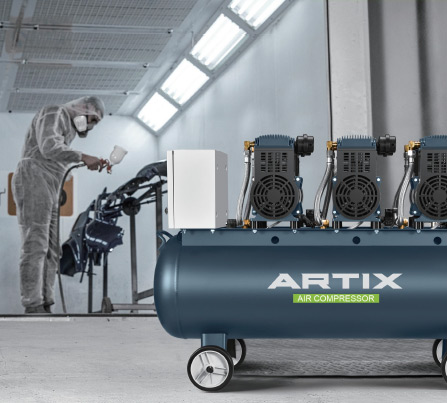
1. How Does Drive Type Affect Your Daily Workflow?
People concerned with workflow often highlight adaptability. A belt drive compressor’s pulley system lets you change the effective speed and pressure output without changing the motor, making it flexible for diverse tasks. For instance, on jobs that require different air pressure levels throughout the day, users appreciate the option to fine-tune performance without swapping out equipment.
On the other hand, a direct drive air compressor keeps the motor and pump running at the same speed, without a belt buffer in between. The simplicity of this setup means fewer energy losses and a more uniform air output — a trait many users value when tasks require consistent performance over long periods.
2. Maintenance and Workflow Interruptions
A practical workflow hinges on reliability and ease of maintenance. Belt driven systems generally require regular belt inspection, tensioning, and occasional replacement because belts wear out over time. This can introduce unplanned interruptions if maintenance isn’t strictly planned into your work schedule.
By contrast, direct driven compressors have fewer moving parts, which usually translates to lower routine maintenance needs. With no belts to adjust or replace, less time is spent on mechanical upkeep, leaving more time for productive work — a clear workflow advantage in high-use environments.
Artix Machinery Co., Ltd. considers these factors when designing compressor lines, offering configurations that balance operational uptime with straightforward servicing for industrial workflows.
3. Noise and Worksite Comfort
Noise level may not be the very primary workflow concern for every buyer, but it quickly becomes important in enclosed or busy workspaces. Belt driven air compressors can be quieter because the belt system absorbs some vibration and reduces sound propagation.
Direct drive compressors, with their simpler mechanical layout, can sometimes be louder because vibrations transmit directly from the motor to the compressor without the damping effect belts provide. For teams that spend long hours near running equipment, this difference could influence comfort and productivity.
4. Energy Efficiency and Operational Costs
Energy cost and efficiency also intersect with workflow considerations. Direct driven compressors generally transfer power more efficiently because there are no belts or pulleys to cause additional friction and energy loss. This can result in lower long-term electricity usage, which benefits workflows that involve continuous operation or heavy usage periods.
Belt driven compressors may have higher energy losses due to friction in the belt system, but these losses may be acceptable in workflows where flexibility in pressure output and adjustable speed take priority.
5. Choosing Based on Workload Patterns
Ultimately, matching compressor type to workflow comes down to how you work. For environments where compressed air use fluctuates between different tools and pressure requirements, a belt driven air compressor’s flexibility might offer smoother workflow integration. Its ability to adapt output without extensive reconfiguration keeps jobs moving without pauses for mechanical changes.
In contrast, workflows that demand consistent, prolonged air delivery with minimal maintenance interruption — such as continuous industrial production or automotive manufacturing — often benefit from direct driven designs. Their simplified mechanics reduce wear points and streamline service intervals.
Aligning Compressor Type with Your Workflow
The choice between a belt driven and a direct driven air compressor isn’t about one being universally better; it’s about which aligns with your workflow demands. While belt driven models offer flexibility, quieter operation, and adjustable performance, direct driven systems provide greater mechanical simplicity, efficiency, and consistent output. Recognizing how these attributes match your day-to-day tasks empowers smarter equipment decisions and smoother worksite operations.
Investing time to assess your air usage patterns, noise tolerance, and maintenance capacity will pay off in productivity gains and cost savings over the long run.