English
 Español
 Français
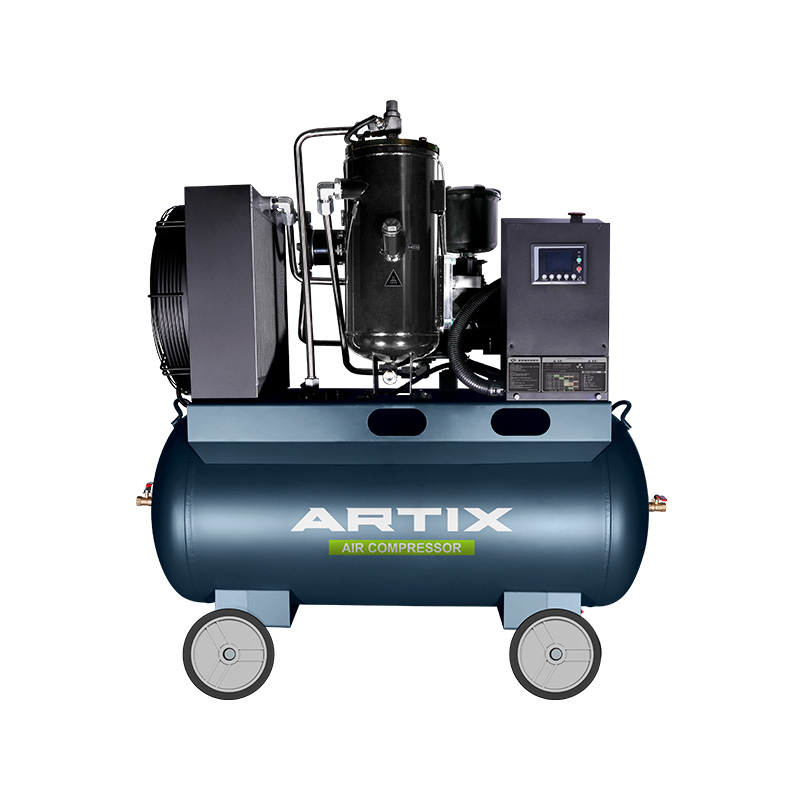
Industrial production lines increasingly rely on stable compressed air systems, and an Industrial Oil Free Air Compressor plays a critical role in ensuring clean and consistent airflow. Many factories sourcing from a wholesale air compressor supplier expect stable pressure output, yet pressure drops remain one of the most reported operational issues across maintenance forums and industrial feedback channels.
1. System demand exceeds compressor capacity
Production expansion often increases air usage without upgrading the compressor.
- Multiple pneumatic tools starting simultaneously create sudden load spikes
- Fixed-speed compressors respond slower than demand changes
- Buffer tank volume is too small for peak load compensation
In industrial field data, mismatch between air supply and demand is one of the most frequent causes of transient pressure loss, especially in continuous production environments
Factory solution approach:
- Match compressor output (m³/min) with peak consumption, not average usage
- Add or expand air receiver tanks (recommended 200–1000L depending on line size)
- Use staged compressor systems for large plants
2. Air leakage across distribution network
Even small leaks accumulate into significant pressure instability.
Common leakage points:
- Quick couplings
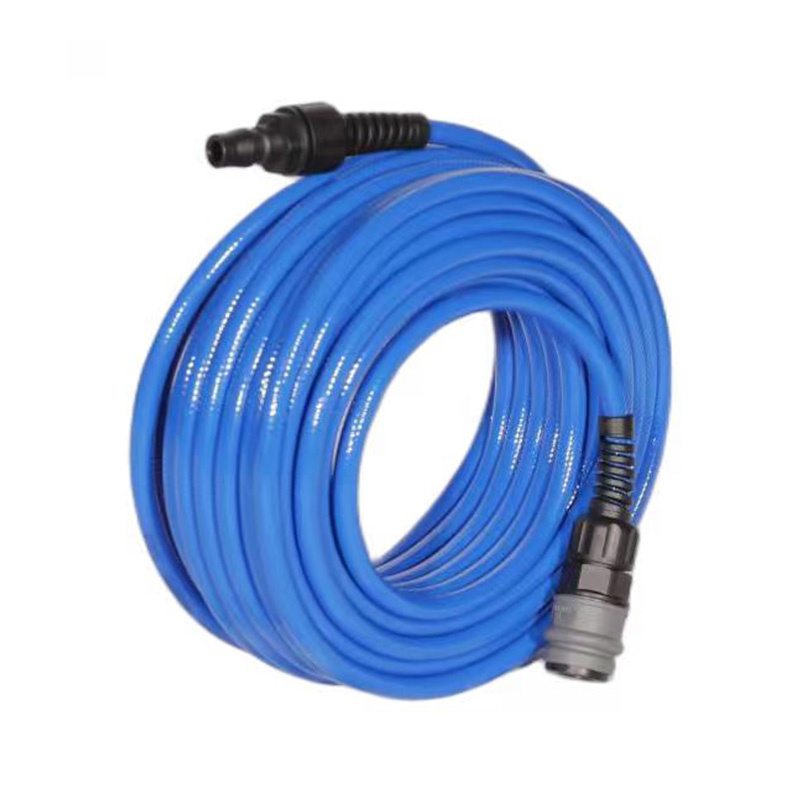
- Aging rubber hoses
- Threaded pipe joints
- Valve seals
A single unnoticed leak can reduce system pressure by more than expected and force compressors into frequent loading cycles
Factory solution approach:
- Conduct ultrasonic leak detection monthly
- Replace aging connectors in high-vibration areas
- Standardize sealing tape and torque control during installation
3. Improper piping design and flow restriction
Air transport efficiency is often underestimated in factory layouts.
Typical issues include:
- Undersized pipe diameter
- Excessive 90° elbows
- Long horizontal distribution lines
Flow resistance increases sharply with poor piping structure, causing pressure drop even when compressor output is stable
Factory solution approach:
- Use looped piping systems instead of single-end distribution
- Reduce sharp bends in main air lines
- Upgrade main pipeline diameter during system expansion
4. Clogged filters and drying system bottleneck
Oil-free systems rely heavily on filtration stability.
Problems include:
- Blocked intake filters reducing air intake volume
- Saturated dryers increasing system backpressure
- Separator restriction at downstream units
A clogged filtration stage can significantly reduce airflow efficiency and create false compressor “underperformance” symptoms
Factory solution approach:
- Replace filters based on pressure differential, not time alone
- Maintain dryer drainage systems
- Install differential pressure indicators on filter housings
5. Control system imbalance or incorrect pressure settings
Modern oil-free compressors depend on sensor-driven control logic.
Possible issues:
- Incorrect cut-in / cut-out pressure range
- Sensor drift in pressure transducers
- Poor synchronization in multi-compressor systems
Even minor control misalignment can cause rapid loading/unloading cycles, leading to unstable pressure behavior and energy waste.
Factory solution approach:
- Calibrate pressure sensors every 6–12 months
- Set wider pressure bands in unstable load environments
- Integrate master controller for multi-unit coordination
Engineering perspective from Artix Machinery Co., Ltd.
At Artix Machinery Co., Ltd., production of Industrial Oil Free Air Compressor systems focuses on stabilizing airflow through optimized compression chamber design and intelligent control response. As a manufacturer serving global wholesale air compressor demand, system stability testing is performed under variable load simulation to replicate real factory conditions.
Key design considerations include:
- Low thermal expansion air end structure
- High-efficiency cooling channels
- Smart pressure feedback loop system
- Modular maintenance architecture
These improvements reduce unexpected pressure fluctuation behavior in real industrial environments.