English
 Español
 Français
Compressed air is widely used in automotive workshops, metal fabrication, spray painting, packaging, and industrial automation. However, the quality of compressed air is often overlooked when businesses purchase new equipment. Moisture, oil contamination, and airborne particles can affect pneumatic tools, damage sensitive components, and create defects in certain production processes. For industrial buyers evaluating a Belt Type Air Compressor, understanding how air quality, moisture control, and system configuration work together is just as important as comparing motor power and pressure ratings. A properly selected compressor, combined with suitable air treatment equipment, can help businesses maintain more reliable production conditions.
Why Does Moisture Accumulate in Compressed Air?
Atmospheric air naturally contains water vapor. When air enters a compressor and is compressed, its temperature and pressure change. As the compressed air cools, some of the water vapor condenses into liquid moisture.
This process can create problems throughout the compressed air network. Water may accumulate inside storage tanks, pipelines, filters, and pneumatic equipment. If it is not managed properly, corrosion and equipment deterioration may occur.
The amount of moisture generated depends on factors such as ambient humidity, intake air temperature, operating conditions, and system configuration. Facilities in humid climates should pay particular attention to compressed air treatment.
How Can Poor Air Quality Affect Industrial Operations?
Different applications have different compressed air quality requirements. Moisture that causes little difficulty for some general pneumatic tools may create serious problems in precision manufacturing or surface finishing.
Common consequences include:
- Pneumatic equipment problems: Water accumulation may contribute to corrosion and inconsistent tool operation.
- Spray painting defects: Moisture contamination can affect coating appearance and finish quality.
- Pipeline deterioration: Condensed water may accelerate internal corrosion in unsuitable piping systems.
- Product contamination: Certain manufacturing processes require controlled compressed air quality to protect the final product.
For this reason, buyers should identify the required air quality before deciding which compressor and treatment components to purchase.
Does a Larger Air Receiver Tank Solve Moisture Problems?
An air receiver tank plays several roles in a compressed air system. It stores compressed air, helps accommodate short-term demand fluctuations, and can reduce frequent compressor loading and unloading in appropriately designed systems.
It may also provide an opportunity for compressed air to cool and some moisture to separate from the airflow. However, an air receiver alone cannot remove all water vapor or guarantee dry compressed air.
To manage moisture more effectively, industrial facilities may need a combination of equipment, including:
- Air receivers with suitable condensate drainage.
- Aftercoolers to reduce compressed air temperature.
- Moisture separators to remove condensed water.
- Refrigerated or desiccant air dryers according to required dew point.
- Appropriate filtration for downstream applications.
The correct configuration depends on the operating environment and the air quality required by connected equipment.
How Does Compressor Selection Influence System Reliability?
A compressor should be selected according to actual air consumption rather than simply choosing a model with higher motor power.
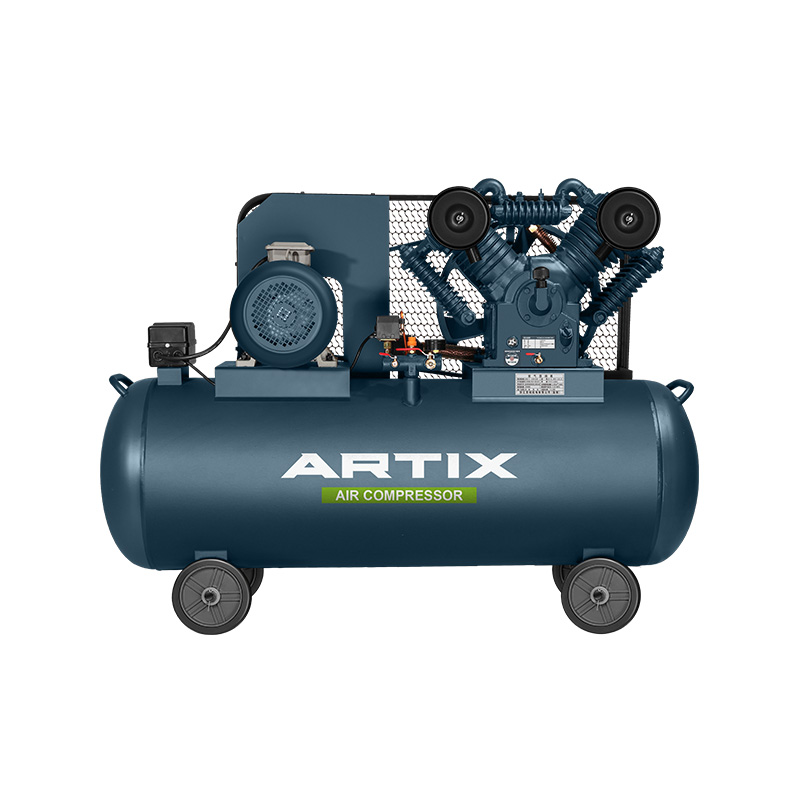
A belt-driven design transfers motor power through pulleys and belts, allowing the transmission ratio to be configured for the intended compressor speed. This arrangement is used in various workshop and industrial applications.
When comparing models, buyers should examine airflow capacity, working pressure, motor power, cooling arrangements, and expected operating hours. Proper ventilation is also important because excessive ambient heat can influence compressor operating conditions.
A well-matched compressor helps avoid unnecessary energy consumption and reduces the risk of insufficient air supply during production.
What Maintenance Practices Help Keep Compressed Air Clean?
Air treatment equipment requires regular attention to remain effective. Blocked filters, full condensate drains, and poorly maintained dryers can reduce system performance even when the compressor itself is operating normally.
Maintenance teams should establish procedures covering filter inspection, drain operation, dryer condition, and receiver tank checks. Belt tension and pulley alignment should also be inspected according to the compressor manufacturer's recommendations.
In addition, checking pipeline connections for air leaks can help reduce unnecessary compressor operation and improve overall system efficiency.
What Should Buyers Ask Before Purchasing a Belt-Driven Compressor?
International buyers should discuss the complete application rather than request quotations based only on horsepower.
Important questions include:
- What airflow and pressure are required by the connected equipment?
- Is an air receiver tank included or supplied separately?
- Which air treatment components are recommended?
- What electrical supply is required?
- Which replacement parts are available?
- What maintenance procedures should operators follow?
Clear answers make it easier to compare manufacturers and plan the complete compressed air installation.
How Can Manufacturers Support Better Air System Planning?
As a compressor manufacturer, we understand that equipment selection should consider the entire compressed air application. A suitable compressor needs to match the customer's production demand, installation conditions, and maintenance capabilities.
We encourage buyers to communicate their working pressure, airflow requirements, operating schedule, and intended applications before confirming an order. This information helps establish more appropriate product specifications and identify whether additional air treatment equipment is needed.
For industrial distributors, workshop operators, and manufacturing facilities sourcing a Belt Type Air Compressor, choosing a manufacturer that can explain equipment configuration and maintenance requirements helps create a more dependable compressed air system. Paying attention to moisture management from the beginning can also reduce downstream equipment problems and support consistent production quality.