English
 Español
 Français
Choosing an industrial compressor is not simply a matter of comparing pressure ratings or motor power. In real production environments, the complete machine needs to work reliably as a coordinated system. The drive arrangement, compressor head, motor, cooling structure, control components, frame, and service access all influence how the equipment performs after installation. As a Belt Driven Compressor manufacturer, we focus on the complete equipment design so that individual components work together as one practical solution for industrial applications.
Start With the Required Air Demand
Every production environment has a different compressed air profile. Some machines operate intermittently, while others may require a more regular supply during working hours. Choosing equipment without understanding the actual air demand can result in an unsuitable configuration.
During equipment development, we consider the customer's working conditions, required pressure, operating schedule, installation environment, and available space. This application information provides the basis for selecting the appropriate compressor configuration rather than relying on a standard machine for every project.
The Drive System Needs Careful Matching
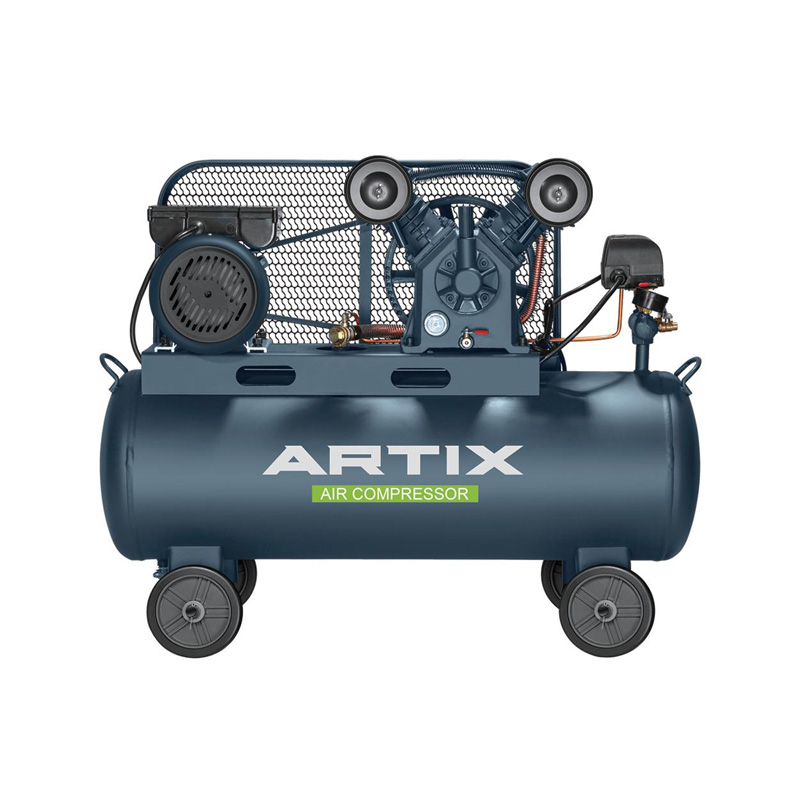
In a belt-driven design, the motor and compressor are connected through pulleys and a belt transmission system. Their relationship affects how power is transferred during operation.
Our equipment design considers motor selection, pulley arrangement, shaft positioning, belt configuration, and supporting structure as connected elements. Proper mechanical matching helps create a stable drive system while also providing practical access for inspection and routine servicing.
Cooling Is Part of Equipment Design
Heat generated during compression and mechanical operation needs to be managed through an appropriate cooling arrangement. The effectiveness of cooling can depend on airflow, component positioning, ventilation, and the operating environment around the machine.
Rather than treating cooling as an independent accessory, we integrate it into the overall equipment structure. This allows the compressor layout, protective components, ventilation paths, and major heat-generating parts to be considered together during manufacturing.
A Practical Frame Supports the Whole Machine
The frame is responsible for supporting major components while maintaining their intended relationship during operation. Motor position, compressor assembly, belt transmission, protective covers, and service areas all need to fit within the available structure.
For customized equipment projects, our manufacturing team reviews the machine layout according to customer requirements. Installation footprint, component accessibility, protection, and transportation considerations can all influence the final equipment configuration.
Maintenance Should Be Considered Before Delivery
Industrial buyers naturally want equipment that is straightforward to operate and maintain. Filters, belts, fasteners, and other serviceable components may require periodic inspection depending on the equipment configuration and working conditions.
We consider access to these areas during equipment design. A well-organized machine layout can make inspection and servicing more practical while maintaining appropriate protection around moving components.
Factory Assembly Determines Equipment Consistency
For an equipment manufacturer, producing a reliable compressor involves more than sourcing suitable individual components. Assembly accuracy and process control determine whether the finished machine performs according to its intended design.
Our production process connects component inspection, mechanical assembly, drive-system installation, electrical integration where required, adjustment, and final equipment inspection. This allows potential assembly issues to be addressed before the machine reaches the customer.
Testing Should Reflect the Final Equipment
Testing is an important stage before an industrial compressor leaves the factory. The purpose is not simply to confirm that the machine starts, but to evaluate whether its major systems operate together as expected.
Depending on project requirements, equipment evaluation may cover:
- Mechanical operation and belt transmission
- Pressure and compressed-air performance
- Motor and compressor operation
- Cooling and ventilation
- Noise and vibration conditions
- Control and safety functions
The specific inspection scope can be aligned with the customer's technical requirements and intended application.
Equipment Manufacturing Creates More Customization Options
Industrial customers may have different requirements for installation space, operating conditions, electrical configuration, air demand, and machine layout. A manufacturer with in-house equipment engineering capabilities can adjust the overall design instead of limiting the customer to a fixed configuration.
As a Belt Driven Compressor manufacturer, we combine equipment design, component selection, mechanical assembly, production control, and final testing to develop compressor systems around specific industrial applications. For overseas machinery distributors, production facilities, and equipment integrators, this approach provides a more direct path from application requirements to a finished Belt Driven Compressor designed for practical operation.