English
 Español
 Français
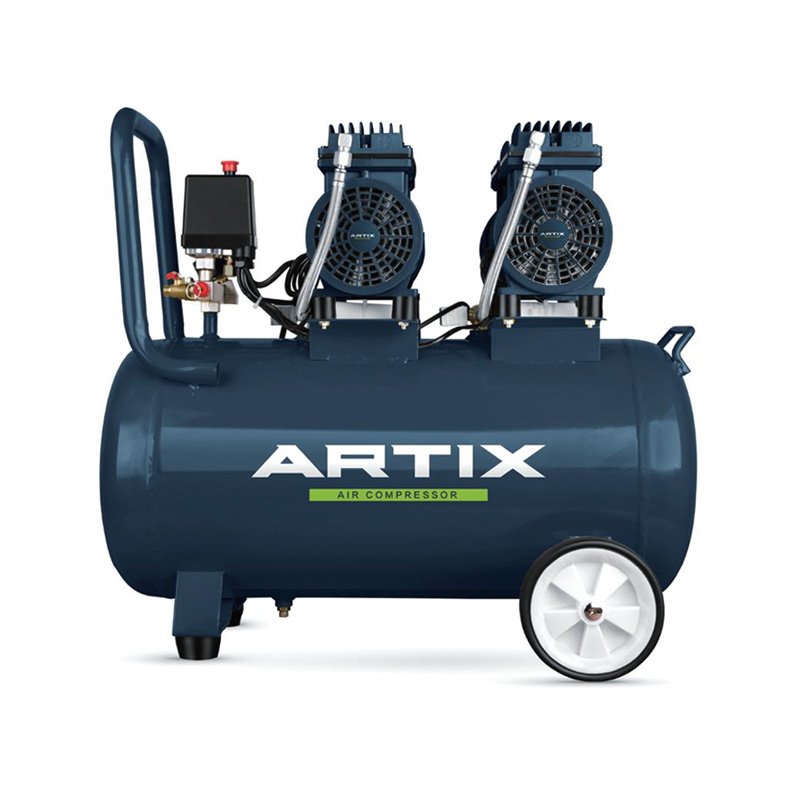
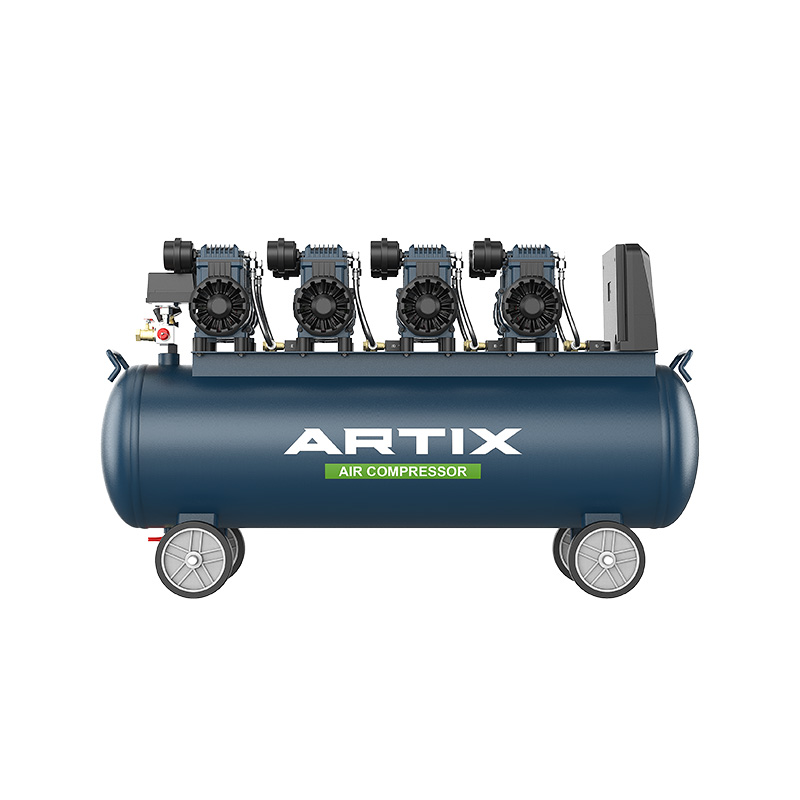
Efficient production relies on compressed air systems that deliver steady performance without overheating. An Industrial Oil Free Air Compressor is particularly sensitive to thermal stress because it lacks oil for internal cooling, making heat management a critical factor. Factories sourcing from a wholesale air compressor supplier often encounter overheating complaints, especially under high-demand or continuous operation.
1. Excessive ambient temperature
Air compressors are affected directly by their surrounding environment:
- High factory floor temperatures reduce cooling efficiency
- Enclosed cabinets can trap heat, increasing component temperature
- Sunlight or proximity to ovens or heat-emitting machinery worsens the situation
Solution: Install compressors in well-ventilated spaces, add exhaust fans or vents, and avoid placing them near other heat sources.
2. Poor cooling airflow around the air end
Air-cooled compressors rely on moving air to dissipate heat from the compression chamber:
- Dust accumulation blocks cooling fins
- Nearby obstacles reduce airflow
- Fans may degrade over time or rotate at reduced speed
Solution: Schedule monthly cleaning of heat sinks, check fan operation, and maintain a clearance zone around the compressor.
3. High operating load or continuous full-capacity use
Even compressors rated for continuous duty generate heat if run at maximum capacity without buffer:
- Heavy-duty applications with frequent pressure spikes stress the rotor and motor
- Lack of air receiver tanks leads to immediate demand on the compressor
- Multi-tool simultaneous operation amplifies the heat load
Solution: Use staged compressors, add buffer tanks, or install variable frequency drives (VFD) to modulate load and reduce thermal stress.
4. Internal airflow restrictions
Oil-free compressors depend on unrestricted airflow to maintain cooling:
- Blocked intake filters reduce the air entering the compression chamber
- Moisture separators clogged with condensate impede airflow
- Downstream piping constrictions cause backpressure
Solution: Replace or clean filters regularly, inspect moisture separators, and verify piping diameters meet system design standards.
5. Mechanical wear and tolerances
Precision components in oil-free compressors can generate excessive friction if tolerances are off:
- Rotor clearance increases with wear, leading to heat generation from internal leakage
- Bearings or seals degrade, increasing mechanical resistance
- Improper alignment of motor and compressor head contributes to stress
Solution: Conduct preventive maintenance on bearings, seals, and rotor alignment, and replace worn components proactively.
6. Electrical and control issues
Voltage fluctuations or misconfigured controls can indirectly cause overheating:
- Motor under voltage increases current draw, raising temperature
- Faulty thermistors or pressure sensors prevent correct cooling fan activation
- Repeated cycling due to sensor lag adds thermal stress
Solution: Ensure stable power supply, calibrate sensors, and verify proper function of electronic controls.
Factory Insight from Artix Machinery Co., Ltd.
At Artix Machinery Co., Ltd., overheating is addressed through a combination of:
- Water-cooled compression chambers to reduce rotor temperature
- Optimized airflow channels designed via CFD simulations
- High-tolerance rotors that maintain minimal friction
- Intelligent control systems that modulate load to prevent heat accumulation
This design approach ensures Industrial Oil Free Air Compressor units operate reliably, even in high-demand production lines, while supporting global wholesale air compressor needs.
Overheating is rarely due to a single factor; it results from a combination of environmental conditions, load, airflow restrictions, and component wear. Proactive maintenance, proper installation, and system design optimized for thermal management can prevent overheating, ensuring stable performance and longer service life.
Factories that implement these strategies enjoy more consistent pressure, lower downtime, and reduced energy costs—critical advantages in modern industrial operations.